
ENOUGH IS ENOUGH: Estepona feels wronged by the refereeing again
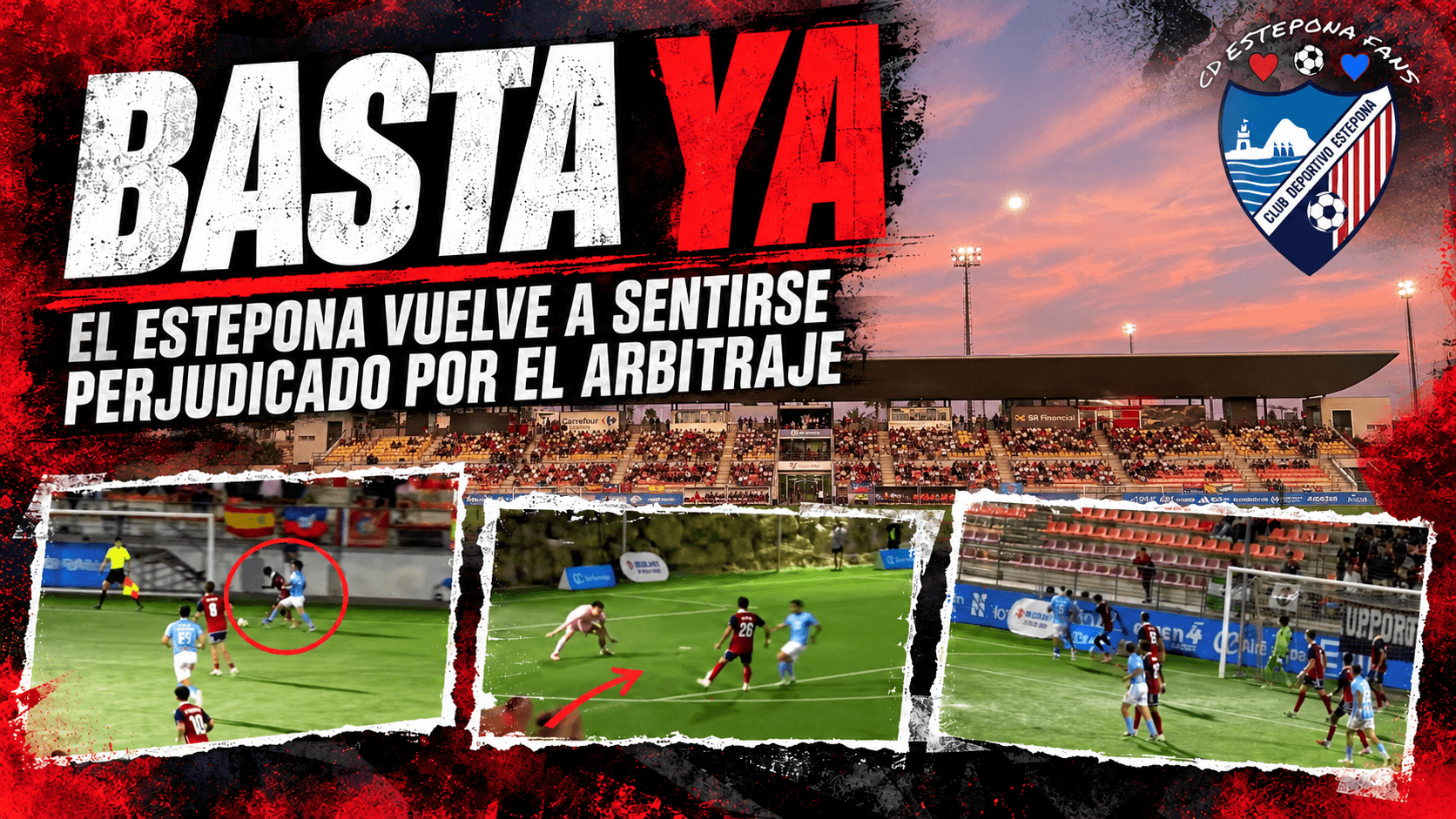
The 2-2 draw against Ciudad de Lucena left much more than a point: a goal disallowed for Bakary Sow with the assistant referee far behind the play, a highly questionable corner kick that led to the 2-2 equalizer, and a series of small decisions that left us with a feeling of inequality that was hard to ignore.
Some matches end with a result that leaves little more to analyze. Others, however, leave us with the feeling that not everything was judged by the same standards. CD Estepona drew 2-2 against Ciudad de Lucena last Saturday, October 24th, but those of us who experienced the match from the stands of the Francisco Muñoz Pérez stadium also left with a deep frustration due to several refereeing decisions.
We're not writing this from a distance or based solely on images. We were at the Francisco Muñoz Pérez stadium and witnessed situations that, from our perspective, warrant much stronger criticism. We've since reviewed the live footage to share it and explain why we believe what happened deserves attention.
We're not asking for Estepona to be given anything for free. We don't want biased refereeing or preferential treatment for our team because they're playing in front of their home crowd. We're asking for something as basic as the rules being applied consistently, similar actions being judged the same way, and crucial decisions being made from a position that allows for proper evaluation.
Because the controversy surrounding this match isn't limited to three isolated plays. It also involves the minor fouls, contact, and decisions that accumulate over 90 minutes. And when all these situations leave the impression that the criteria aren't applied equally to both teams, discontent is inevitable.
1. Bakary Sow's disallowed goal: how do you signal offside from so far back?
With CD Estepona leading 2-1, one of the most decisive plays of the match occurred. Ale Contreras recovered the ball in midfield and launched an attacking transition involving himself, Pablo Arriaza, and Bakary Sow.
The play ended with Arriaza passing the ball to Sow, who sent it into the back of the net. Estepona could have extended their lead to two goals in a crucial stage of the match. However, the assistant referee raised his flag and the goal was disallowed for offside.
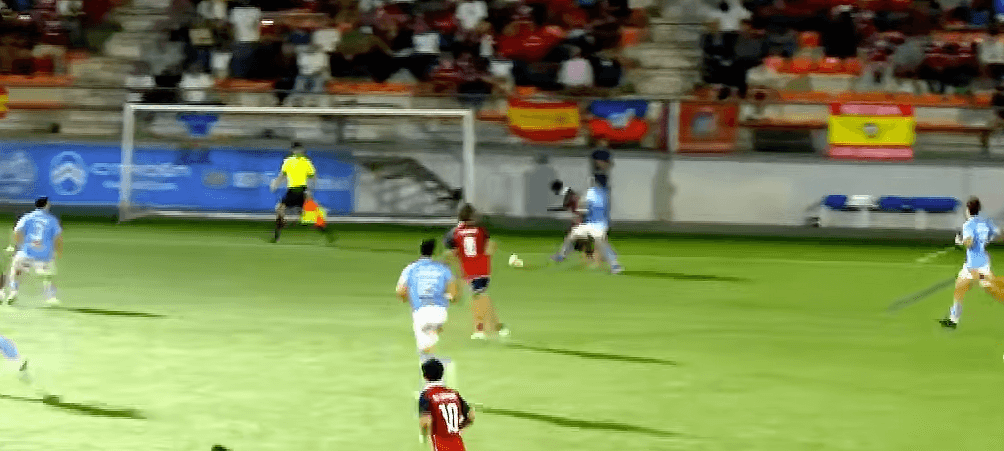
What we saw from the stadium was a linesman far behind the play. We're not talking about a few insignificant meters of difference: our perception from the stands was that he was clearly behind the defensive line he should have been using as a reference. And that position immediately raised a question for us: how can he reliably assess the position of a striker relative to the second-to-last defender if he's so far from the line of play?
An assistant referee must follow the flow of play and stay aligned with the second-to-last defender to have the best possible view. This is not a minor detail: it is a fundamental condition for correctly assessing an offside.
The broadcast doesn't allow us to appreciate that difference with the same clarity as we could see it from the stadium. Nor does it, on its own, provide a definitive reconstruction of all the players' positions. But that doesn't change what we witnessed live: the assistant referee's position seemed clearly inappropriate for judging an action of such importance.
We cannot definitively state, based solely on the available footage, that Bakary Sow was onside. What we do openly question is the perspective from which the decision was made. When a goal that could have made it 3-1 is disallowed, it's not enough to simply raise the flag: it's legitimate to ask whether the referee was in a position to accurately assess the play.
The difference between 2-1 and a potential 3-1 in the final stages is significant. That goal would have given Estepona a two-goal lead and considerably altered the course of the match.
📹 Watch the disallowed goal by Bakary Sow on CD Estepona's live stream

2. The corner kick for the 2-2 draw: a decision that also raises many questions
The second action came in the final stretch of the match and had a direct consequence on the scoreboard: the corner kick from which Ciudad de Lucena's equalizer was born.
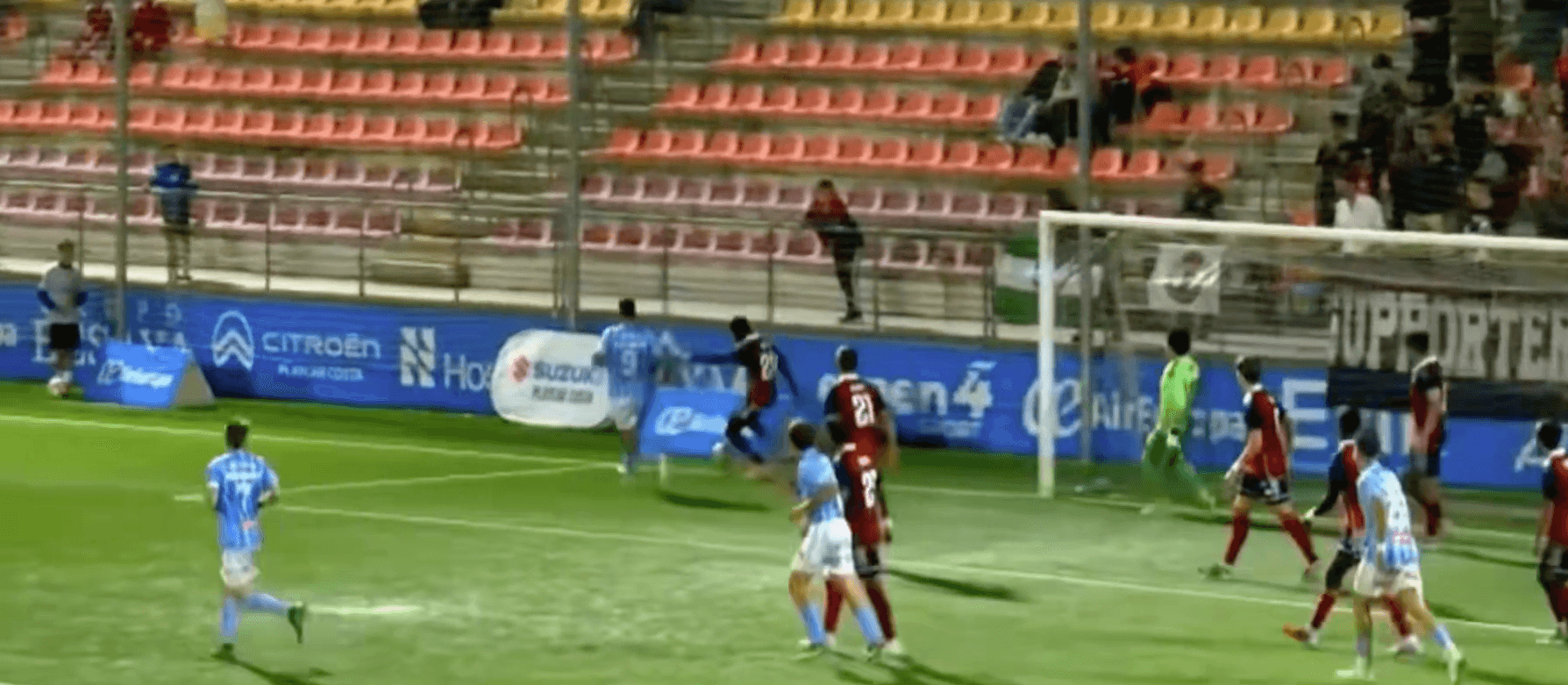
From the stadium, the play left us with a clear impression: Bakary Sow intervened to clear the ball near the byline, and in our opinion, the ball hadn't gone out of play in the manner necessary to award a corner. We believe the decision to award a corner was incorrect.
There's another detail that particularly caught our attention: the visiting player involved in the play continued playing and didn't even appeal for the corner. That behavior, in itself, doesn't prove what the last contact was, but it's especially striking in a play where the referee ended up awarding a crucial corner kick.
The live footage allows us to review the play, although the angle doesn't reveal all the details of the contact and the ball's trajectory. Even with that limitation, our perception from the stands was that the corner shouldn't have been awarded.
And here lies the importance of the decision: the 2-2 equalizer came from that corner kick. We are not talking about an action without consequences, but a decision that gave continuity to an attack from which the visitors' equalizer eventually came.
We can't say for sure that the goal would have been avoided if the corner hadn't been awarded, because the subsequent events would have been different. But we do believe that awarding it was a highly questionable decision. When such a controversial play leads directly to the equalizer, it's understandable that the fans leave the stadium even more frustrated.
📹 Review the corner kick action prior to the equalizer
3. The Bakary Sow post: another action that fuels discontent
Around the 69th minute, Bakary Sow was tackled by José Antonio Pérez Cruz, a player for Ciudad de Lucena. The play resulted in a yellow card for the visiting player. The referee's report states that he was cautioned for a reckless tackle on an opponent while challenging for the ball.
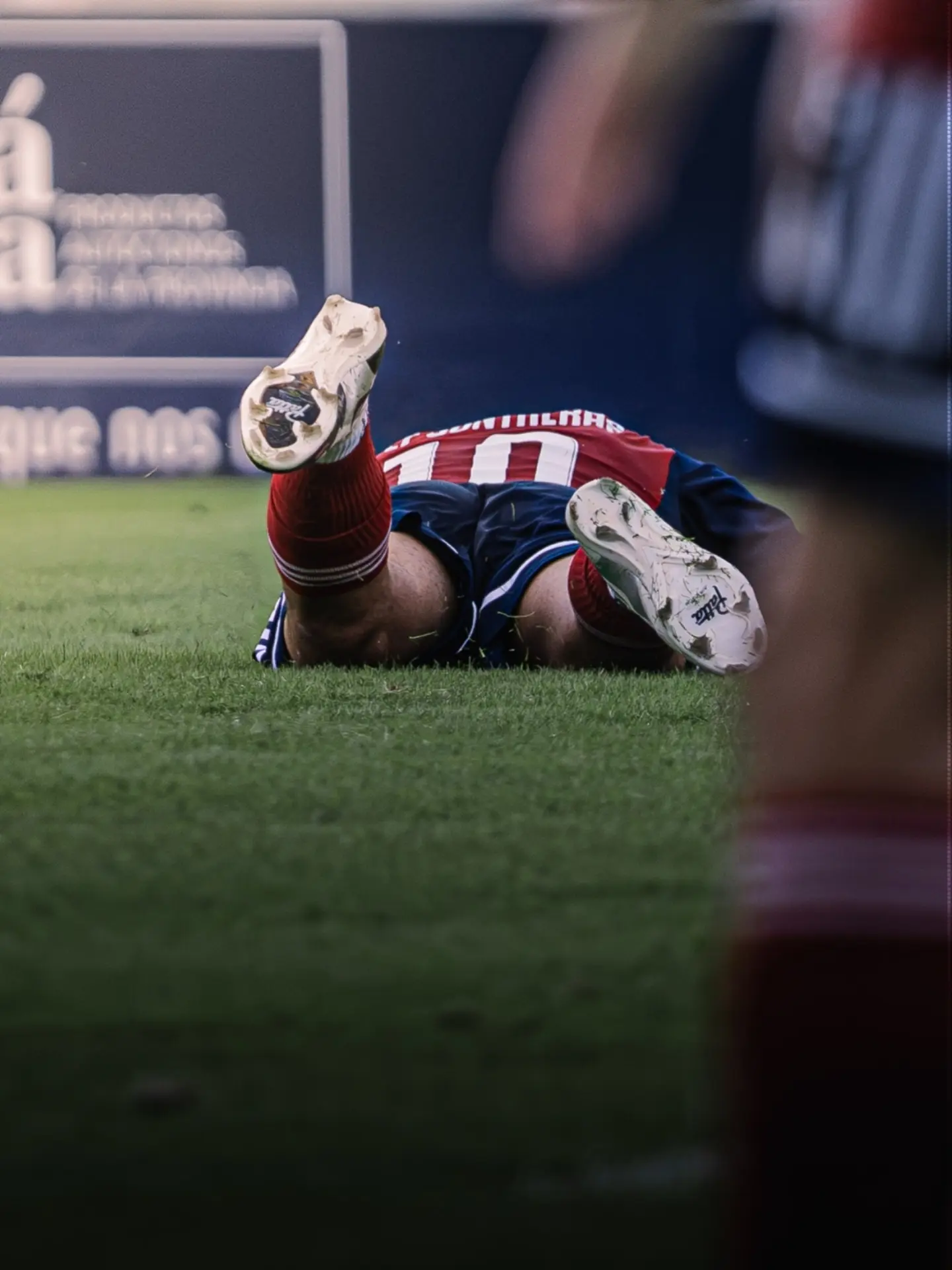
The intensity of the contact and its consequences also deserve attention: Sow needed assistance after receiving a blow to his left quadriceps.
We don't question the referee's decision to show a yellow card. What leads us to include this play is the overall context of the match and the feeling that the criteria applied to contact and fouls were not consistent throughout the game.
Furthermore, the incident occurred near the assistant referee who later flagged Bakary Sow offside. This proximity doesn't prove the subsequent decision was incorrect, but it's another detail that helps explain why both plays were so memorable for those of us who watched the game.
A single tackle can be penalized and still spark a legitimate debate about the permissible intensity during the match and the consistency with which other contacts were judged. The issue isn't an isolated card; it's the criteria applied throughout the 90 minutes.
📹 Watch the Bakary Sow post on the official live stream
4. Small details also matter: the problem of inconsistent standards
This is one of the fundamental aspects of the match and we don't want it to be hidden behind the three most eye-catching plays.
Throughout the match, there were numerous minor fouls, contacts, and plays where the decision to call a foul or let play continue frustrated us from the stands. We felt that the actions of both sides were not judged equally.
An isolated foul can be open to interpretation. Contact can go unnoticed. A referee can make a mistake in a single call. But when similar situations are repeated throughout the game and the response seems to change depending on which team is involved, the problem ceases to be perceived as a simple, isolated error.
Even minor fouls matter. They influence the pace of the game, the intensity with which players contest each ball, and the confidence with which they approach duels. Allowing one contact and penalizing another that is practically identical is no small matter when that criterion is repeated time and time again.
From the stands, this accumulation is precisely what fuels the outrage. Not every decision needs to be decisive on its own: their combined effect can influence how a match unfolds and how the players and fans experience it.
It's not just the disallowed goal, the equalizing corner, or the tackle on Bakary Sow. It's also all those small decisions that, added together, left us with the feeling that Estepona didn't receive the same refereeing treatment as their opponent.
We don't have a comprehensive record of every foul to turn that perception into statistics. But we can explain what we saw: the repeated questionable actions, combined with the most decisive decisions, made our discontent grow as the minutes ticked by.
Demanding consistency doesn't mean insisting that absolutely everything be called out. It means demanding that actions be judged by the same standard, regardless of the team that commits them.
We're not asking for biased refereeing: we're asking for respect and consistent standards.
CD Estepona doesn't need anything handed to them. The red-and-white fans know that matches are won and lost on the pitch, that mistakes are part of football, and that referees have to make decisions in tenths of a second.
But accepting that mistakes exist doesn't mean we have to remain silent when several decisions raise doubts, especially when some may have direct consequences on the scoreboard.
After watching the game and reviewing the footage, our assessment is clear: the disallowed goal by Bakary Sow raises serious questions about the assistant referee's position; the corner kick that led to the equalizer seemed like a wrong decision; and the repeated minor fouls throughout the game reinforced the feeling that the same standards were not applied to both teams.
We cannot assert that there was any intention to harm Estepona. We have no evidence to attribute such an intention to any referee, and we don't need to in order to express strong criticism. Decisions can be questioned based on what happened on the field, without needing to accuse anyone of deliberately acting against a team.
What we're asking for is something basic: that a goal be judged from the correct position, that a corner kick be awarded when it's warranted, and that fouls be judged consistently throughout the match. It's not asking for a favor. It's asking that the rules be applied with the same criteria.
And after what happened against Ciudad de Lucena, we believe that the red-and-white fans have more than enough reason to express their discontent.
Let the images speak for themselves, but let's not ignore what we saw in the stadium
All three sequences of the match are available in the live stream published by CD Estepona. We encourage all fans to watch them in full and draw their own conclusions, taking into account both the footage and the context of each action.
The screenshots can't show every angle or exactly reproduce what you see from the stands. That's why we think it's important to share them along with our experience at the stadium: to provide context, clarify doubts, and open a debate that shouldn't be reduced to simply accepting the result.
The fans' discontent won't be resolved by ignoring it. It will be addressed with transparency, consistency, and confidence that decisions will be made using the same criteria for all teams.
CD Estepona Fans will continue to defend the right of the red-and-white supporters to express their opinion, with arguments, images, and respect. We are not asking for any advantages for playing at the Francisco Muñoz Pérez stadium. We are asking that Estepona receive the same treatment as any other team.
Because being the voice of the fans also means speaking up when we feel something hasn't been fair.
CD Estepona Fans | The Voice of the Fans.
Your business doesn't need another template.

You might also like


Trending now
Last 30 daysThe CD Estepona Fans app, on iPhone and Android
Estepona's news, matches and results as they happen, free on your phone.