
Manolo's plan in Lebrija: pressure, transition, and competitive maturity
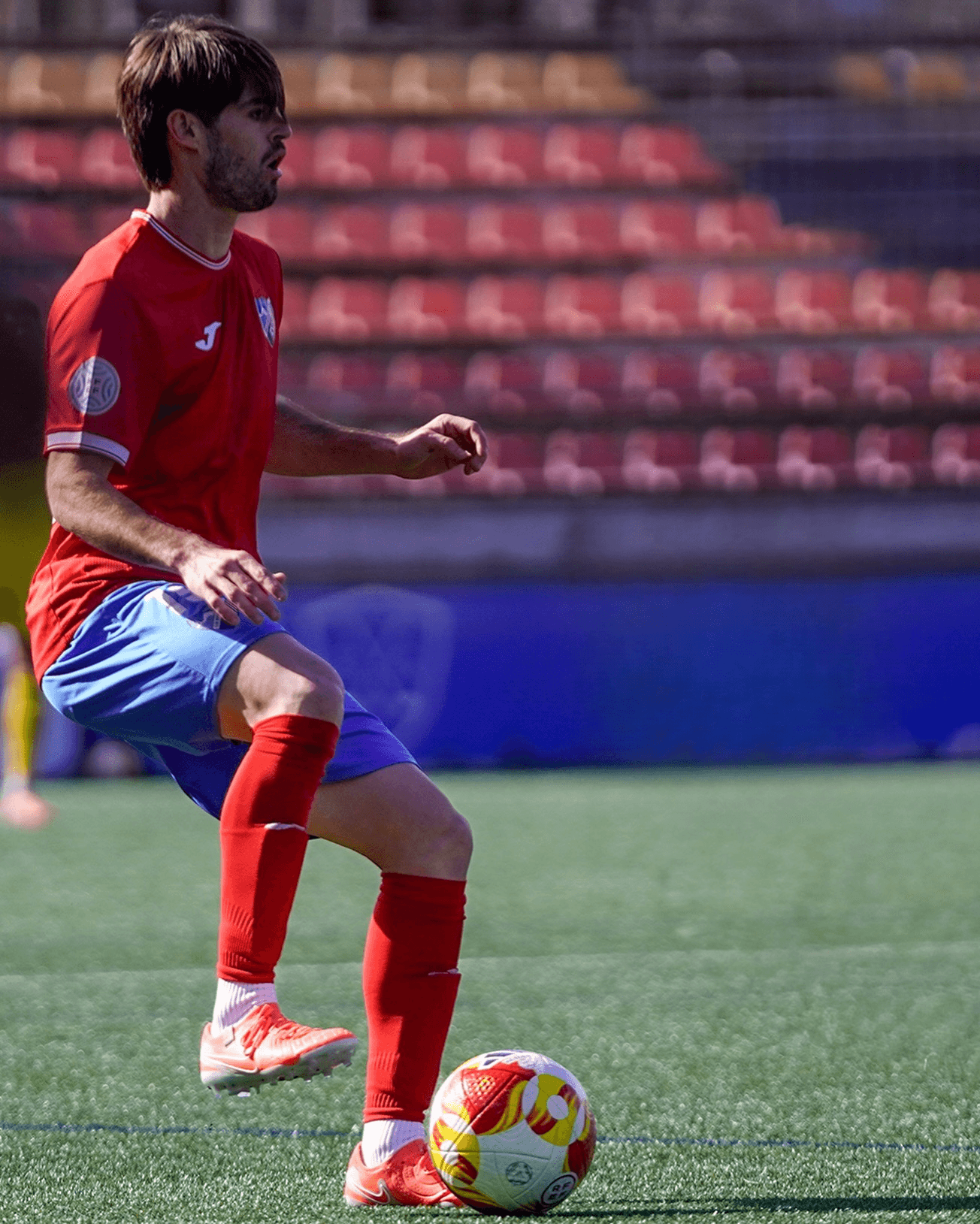
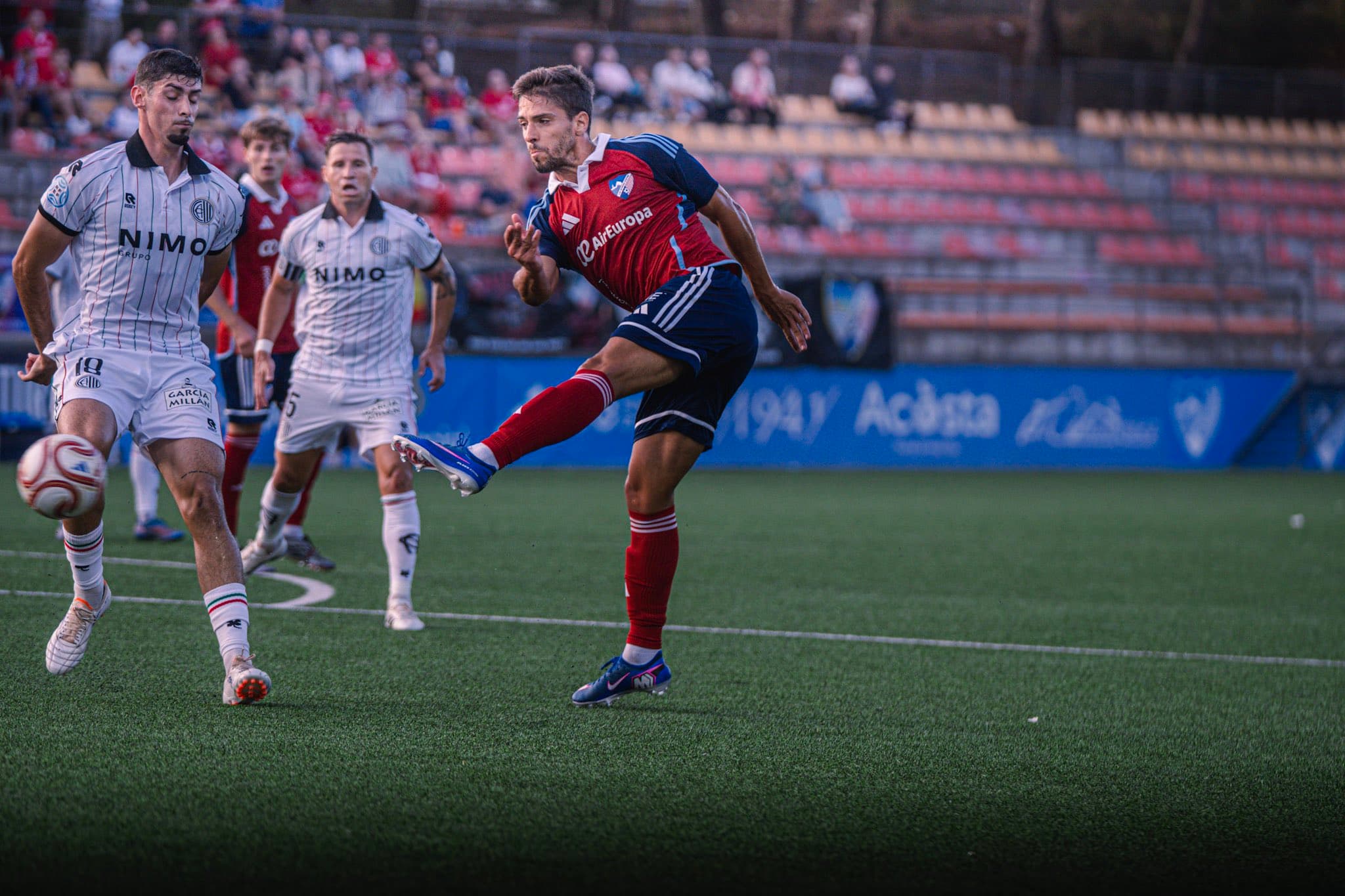
CD Estepona did not win in Lebrija through inspiration. They won through planning. The victory against the best home team in the group was no accident. It was the result of a clear plan, a recognizable idea, and a very conscious execution of the context. Image: CD Estepona ## 5-4-1 that becomes 4-5-1
The initial system was once again the one that Manolo Sánchez has consolidated since his arrival: three center backs (Caro, Titi, and Antonio Marín), two wingbacks (Iván Muñoz and Ballarín), a physical and dynamic midfield (Duarte, Sandji, and Sergio León), and Ariel as the target man. But the key is in the adaptation.
When defending, the team shifted to a back four with Iván closing down as a full-back and Ballarín dropping back. In the middle, a very compact line of five was formed, with Héber helping out on the wing and Sandji free to press forward. When attacking, the formation reverted to 5-4-1 with deep wing-backs and real width.
It's not just a system. It's a flexible structure. ## The details of the starting eleven: context and physicality Alfonso Candelas' substitution was no accident. A small pitch (95x64), artificial turf with obvious wear and tear, and a game of constant duels. Iván Muñoz offered more power and range for that scenario.
Sergio León's starting position, with his physical presence, also responds to the context: second plays, aerial disputes, and balance on a field where direct play is frequent. Manolo does not improvise. He adjusts. ## High pressure and prepared transition From the first ball, the intention was clear. Duarte kicked directly to the corner zone to activate pressure after loss.
Estepona pressed high up the pitch. They didn't wait. The 0-1 is the best example: immediate recovery after a set piece by the opposition, a first-time vertical pass and Ariel breaking into space. But it wasn't the only one. In the second half, there were several similar situations that didn't end in a goal due to offside or tactical fouls.
The team was ready to run. And they did it better than Antoniano. ## With the ball: more combination play than the opponent Antoniano constantly sought width on their left wing, Makuemimo. That's where the 1-1 came from. Estepona was more patient. Deep fullbacks.
Midfielders with pause. Duarte setting the pace. Héber connecting on the inside. Sandji with mobility and arrival. It was not a reactive team. It was a team that chose when to accelerate. And in the second half, it decided to defend with the ball. Longer possessions, less exchange of blows, more intelligence. That is also competing.
Managing the 1-2 After the break, there was no desperate retreat. There was concentration. Antoniano began to show signs of physical fatigue after the 70th minute. Their direct play—recovering, opening up the wing, and crossing—required constant effort. Estepona, on the other hand, alternated between pausing and transitioning.
They didn't give up running. They didn't give up possession. They didn't shut up shop. That's competitive maturity. ## Defensive solidity as a foundation Beyond individual names, there is one obvious fact: the team concedes fewer goals and competes better when it achieves defensive stability. In the first half of the season, games were broken up too easily. In this stretch, the block is more compact, the pressure is better coordinated, and the team concedes fewer clear chances. It's not a question of individuality. It's structure. The three-center-back system, the work of the fullbacks in defensive return, and the balance in midfield have reduced the spaces between the lines. And when the team concedes fewer goals, the margin for scoring increases.
In this category, the difference is not usually in scoring three goals. It is usually in conceding one less. ## The structural change of the Manolo era Since the coach's arrival, the team has lost only two of nine games. Seven points in 14 games before. Thirteen points in nine games now. The formation is more stable.
The block is more compact. The pressure is more coordinated. The transition is better worked out. It is no coincidence that the team is no longer the same as in the first half of the season. It is evolution. ## Conclusion Lebrija was not an isolated incident. It was the confirmation of an identity.
A team that presses. A team that runs. A team that manages. A team that understands the context. Survival is still a long way off. But tactically, Estepona is already competing like a team that believes. And that, in this category, is the first step in sustaining any reaction.
Your business doesn't need another template.


You might also like
Oct 20, 2026
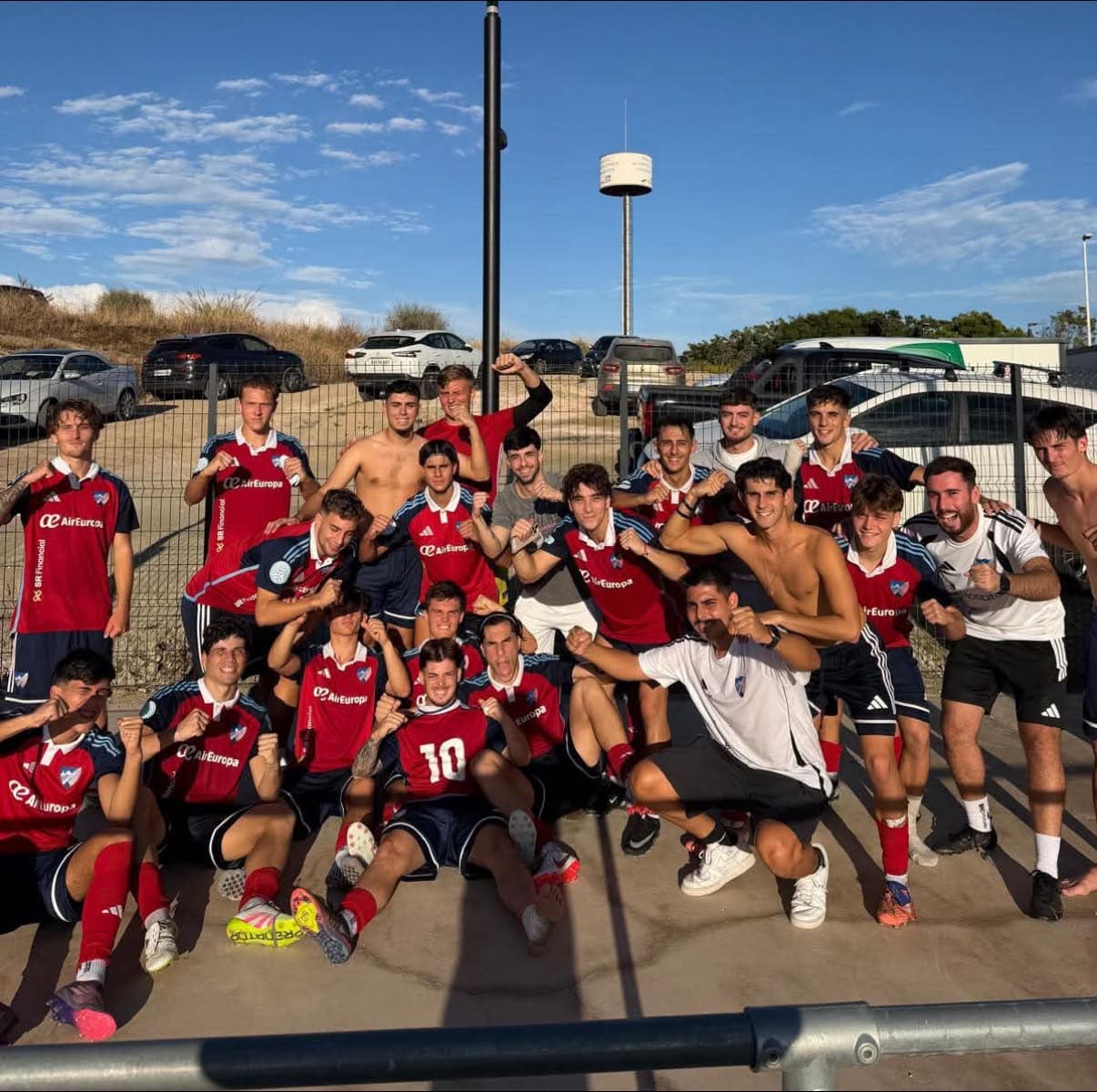
CD Estepona's reserve team and Youth A team secure a double victory at El Ciprés
Oct 18, 2026
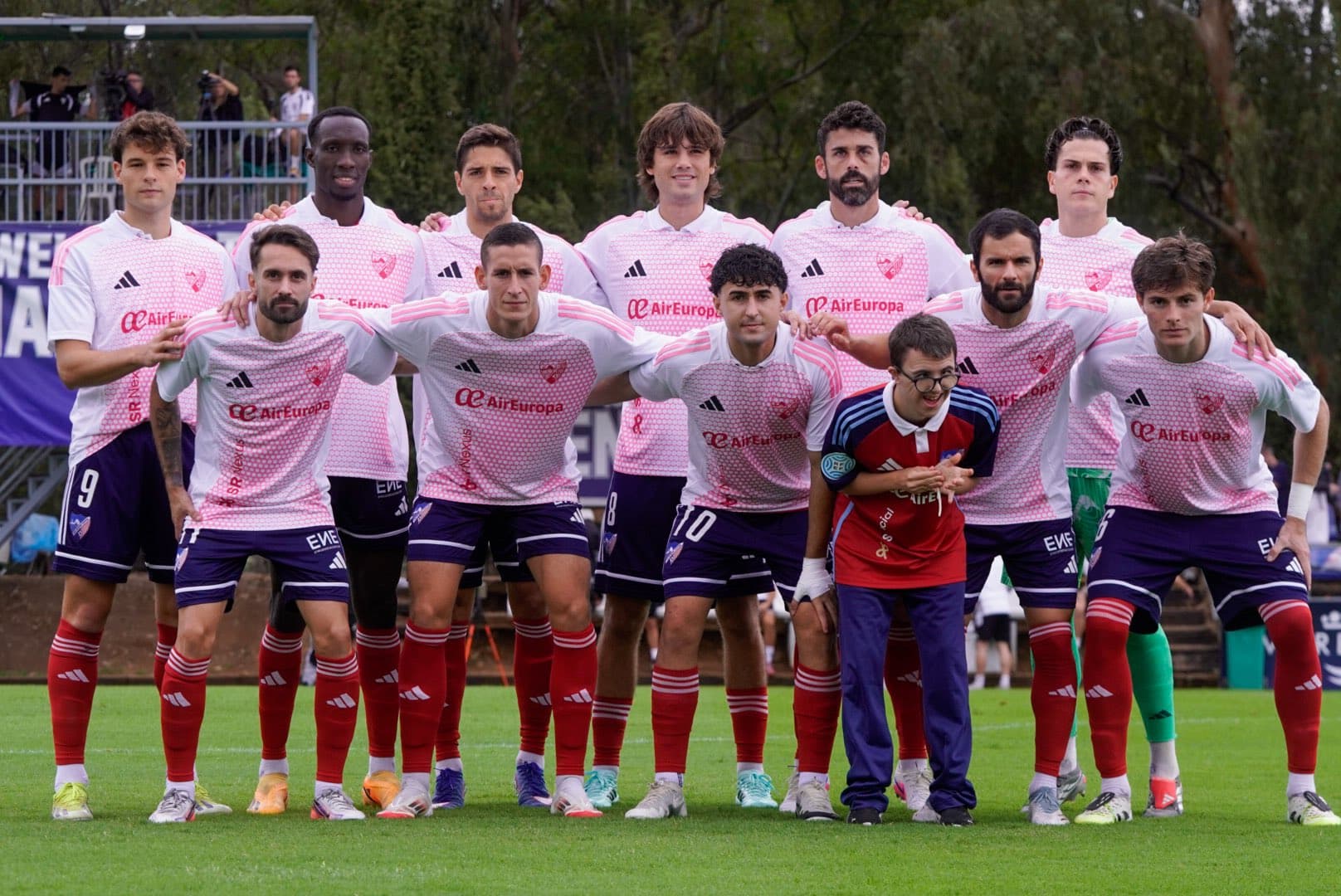
CD Estepona earned a point in the derby against Marbella FC after a match with numerous scoring chances
Oct 12, 2026
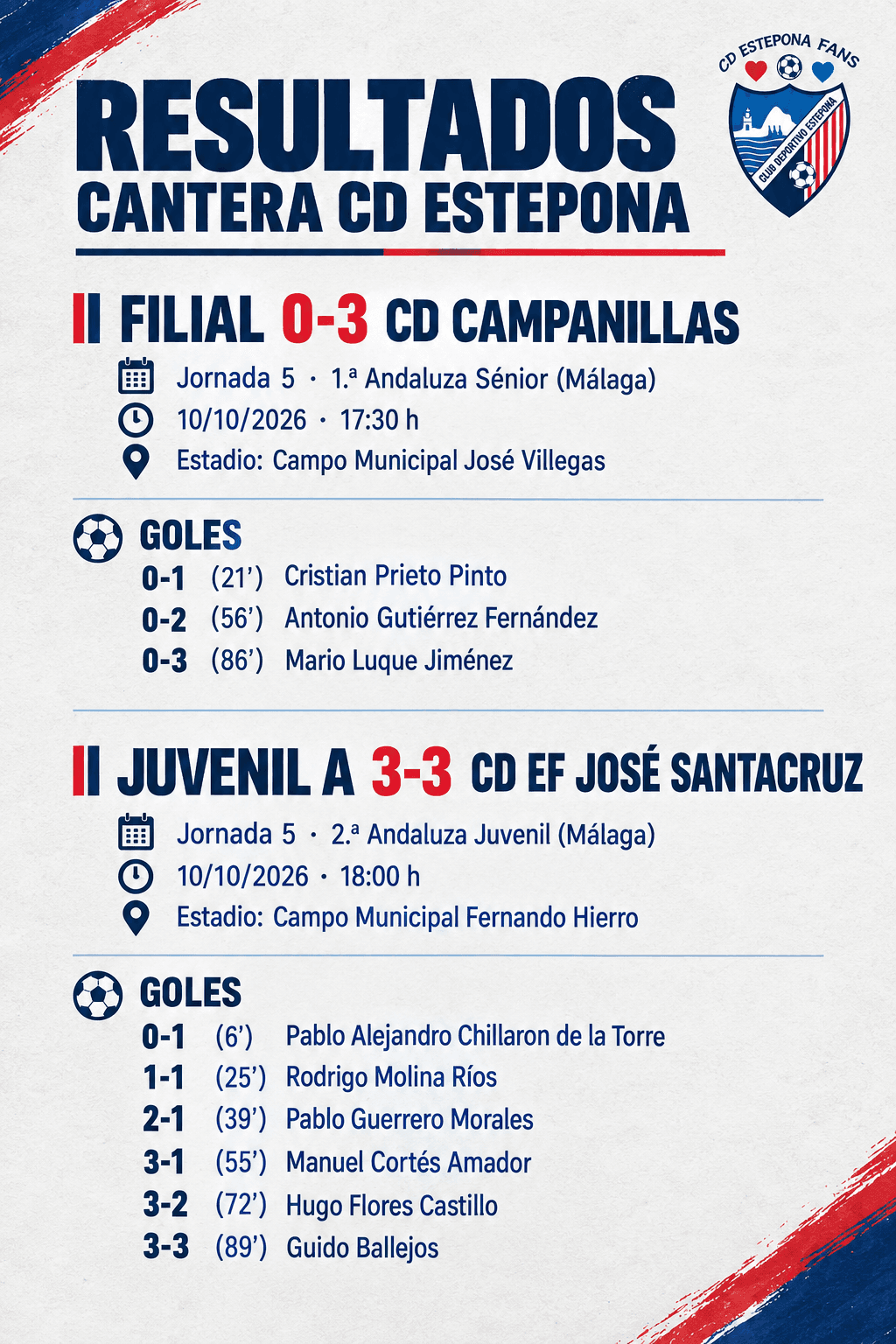
The reserve team suffered a crushing defeat against CD Campanillas (3-0), while the Youth A team salvaged a point at the very last moment (3-3)
Oct 11, 2026
Five goals, two red cards, and three points for Estepona
Trending now
Last 30 daysJoin the Red Tide of CD Estepona
Subscribe and receive all the latest updates about CD Estepona directly in your email. Be part of the CD Estepona Fans community and never miss a detail.